

THE REDEMPTIVE THREAD
Lot, His Daughters, and the Lineage of Christ

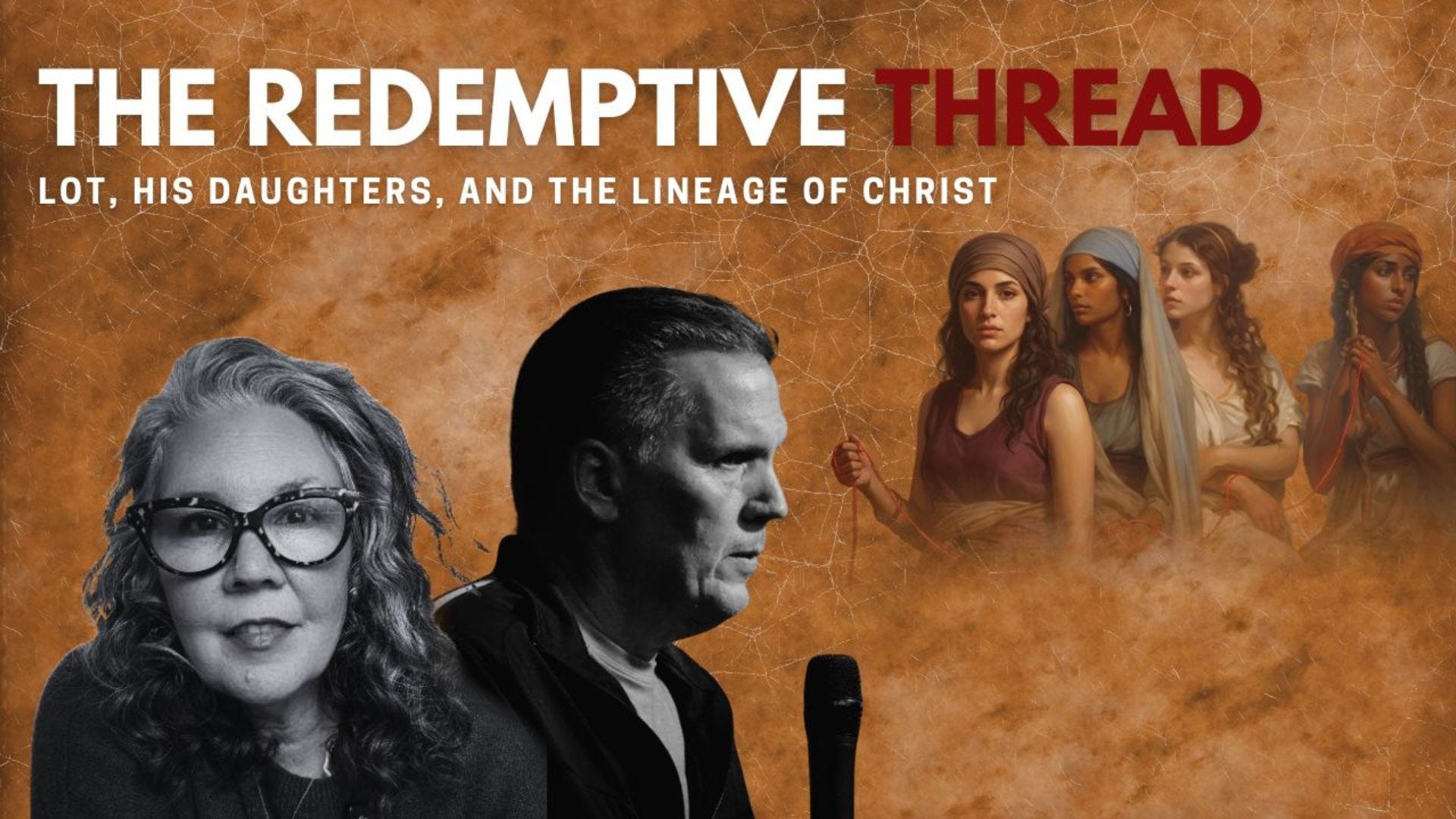
There are passages in scripture that we instinctively avoid. Not because they are unclear, but because they are too raw, too human, too scandalous. Genesis 19 is one of those passages.
When Chris first brought this passage forward during Beholding a few weeks ago, my immediate internal response was honestly accusation. I thought, Why this passage? Out of all the places we could preach from, why go here?
And maybe that reaction itself revealed something deeper.
Because many of us have learned to approach scripture the same way we approach our own storylines: selectively. We highlight the polished parts, the victorious parts, the presentable parts. And we quietly skip over the places that feel embarrassing, painful, compromised, traumatic, or unresolved.
But the Gospel does not skip those places. It enters them.
And maybe that is why passages like this unsettle us so deeply.
Because somewhere beneath our theological discomfort is the fear that parts of our own story may still be beyond redemption.
We rarely say that out loud.
But many people quietly wonder:
Could God really enter this part too?
And that is exactly what we began to see unfolding in the story of Lot and his daughters.
The Cave
Genesis 19:30–38 says:
“Now Lot went up out of Zoar and lived in the hills with his two daughters, for he was afraid to live in Zoar. So he lived in a cave with his two daughters.
And the firstborn said to the younger, ‘Our father is old, and there is not a man on earth to come in to us after the manner of all the earth. Come, let us make our father drink wine, and we will lie with him, that we may preserve offspring from our father.’
So they made their father drink wine that night. And the firstborn went in and lay with her father…
Thus both the daughters of Lot became pregnant by their father.
The firstborn bore a son and called his name Moab… The younger also bore a son and called his name Ben-ammi…”
At first glance, the passage feels almost unbearable. And yet if we slow down long enough to look deeper, we begin to realize scripture is not glorifying the event. It is revealing the condition of humanity east of Eden: trauma, fear, loss, distorted survival, disoriented humanity trying to preserve life in the only way it knows how.
Chris spent much of Sunday walking us through the larger Genesis storyline because this event does not emerge in isolation. It is deeply connected to Babel, the nations, Abraham, Sodom, principalities and powers, exile, inheritance, and ultimately redemption itself.
Genesis 11 presents Babel: humanity resisting dispersion, resisting trust, trying to build upward toward heaven through its own architecture. Humanity choosing autonomy over communion.
Immediately after Babel comes Abraham.
God’s answer to fractured humanity is not abandonment. It is covenant. It is family. It is blessing flowing outward into the nations.
And Lot enters that story as Abraham’s adopted son-like companion.
But throughout Genesis, a contrast slowly develops between Abraham and Lot. Abraham builds altars. Lot builds nothing. Abraham lives as a pilgrim of communion, while Lot continually moves toward what appears prosperous, beautiful, and secure.
Genesis says Lot “chose for himself” the land near Sodom because it looked like Eden. But what appeared outwardly lush was inwardly violent.
Eventually Lot moves from the outskirts of Sodom into its gates, ultimately becoming embedded within the very system that was destroying him.
And this is important: 2 Peter later says Lot’s righteous soul was tormented day by day by the wickedness around him.
Meaning: proximity changes us. Systems shape us. Principalities deform cultures. And compromise slowly numbs perception.
By the time the angels arrive to rescue Lot’s family, the entire environment has become disordered. The men of Sodom attempt violence against the angelic visitors. Lot offers his daughters instead. The daughters watch their father choose preservation over protection.
Then the city collapses. Their mother turns back. Their fiancés remain behind. Everything burns. Everything familiar dies.
And now the daughters sit in a cave believing the future itself has ended.
This is not lust-driven triumph. This is traumatized humanity attempting to preserve life from within collapse. And scripture refuses to sanitize any of it.
The Gospel Hidden in the Scandal
But then the story does something astonishing.
Moab is born from this cave. And throughout the Old Testament, the Moabites become enemies of Israel. Again and again the prophets pronounce judgment on Moab.
And yet from Moab comes Ruth.
Ruth the outsider. Ruth the foreigner. Ruth the Moabitess.
And Ruth becomes the great-grandmother of David, which means this cave in Genesis 19 becomes part of the lineage of Christ Himself.
This is the point where something broke open in me Sunday morning. Because suddenly the story was no longer merely about human failure. It became about a God who is unafraid to enter the most scandalous, painful, and broken parts of the human story and weave redemption through them.
Jesus did not avoid this lineage.
He entered it.
He claimed it.
He sanctified it from within.
And maybe this is why Matthew intentionally includes women like Tamar, Rahab, Ruth, and Bathsheba in the genealogy of Christ. The lineage itself is preaching the Gospel.
Not perfection, but redemption.
Not sanitized spirituality, but incarnation.
God entering the human condition fully.
This is why the incarnation matters so deeply. Christ does not save humanity from a distance. He joins Himself to humanity. He enters the cave. He enters exile. He enters death. He enters shame. And from within humanity’s deepest darkness, He begins restoring creation from the inside out.
“Righteous Lot”
One of the most shocking moments in scripture comes in 2 Peter 2:
“And if he rescued righteous Lot, greatly distressed by the sensual conduct of the wicked… for as that righteous man lived among them day by day, he was tormenting his righteous soul over their lawless deeds…”
Righteous Lot?
Our religious instinct recoils because we want redemption to feel deserved, measured, earned.
But the Gospel continually confronts our systems of accusation.
Peter calls him righteous three times. Not because Lot was mature. Not because he handled everything correctly. Not because his life was free from compromise.
But because God is revealing something about Himself.
The Redeemer sees beyond the visible wreckage of our lives.
And this is where the teaching became deeply personal for many of us. Because most people carry hidden places in their story they believe disqualify them. The places we never mention in church. The places we quietly hope no one ever discovers.
But Hebrews says:
“For he who sanctifies and those who are sanctified all have one source. That is why he is not ashamed to call them brothers.”
— Hebrews 2:11
He is not ashamed. Not ashamed of Lot. Not ashamed of Ruth. Not ashamed to enter the human story. And not ashamed of you.
The Redemption of Identity
Toward the end of the gathering, the conversation shifted toward identity.
Because many of us still primarily interpret ourselves through the lens of our old life rather than through Christ. We continue agreeing with accusation, agreeing with shame, agreeing with separation.
And yet scripture consistently calls believers saints, beloved, sons and daughters, and new creations. Not because we have never sinned, but because Christ has become our life.
There is a difference between acknowledging where we’ve been and building our identity there.
And this matters because agreement shapes perception.
As a man thinks in his heart, so is he.
I shared Sunday about coming out of deep darkness and how difficult it initially felt to speak honestly about parts of my own past. Instinctively, many of us learn that church is the place where we present our polished selves.
But the Gospel is not sustained by image management.
It is sustained by incarnation.
By Christ entering the places we believed were beyond redemption and declaring: Mine.
This is why the New Testament continually invites us not merely into forgiveness, but participation. Union. Christ in you. Not separation managed by religion, but communion restored through Christ.
The Cave Redeemed
Chris shared something Sunday that I have not stopped thinking about.
Lot’s daughters conceived in a cave. And centuries later, Christ Himself would be born in another cave-like dwelling near Bethlehem, in the region connected to Ruth and Boaz.
The very geography begins preaching redemption.
The cave of sorrow becomes the cave of redemption. The place of shame becomes the place where God enters humanity.
Only God could tell a story like this. Only God could take the most fractured places of humanity and weave them into glory.
And maybe that is the invitation for all of us: to stop hiding, to stop interpreting ourselves primarily through failure, and to stop assuming God recoils from the painful parts of our story.
Because the Gospel reveals something altogether different.
I wonder how many of us still carry caves within us. Places we only visit privately. Places marked by shame, regret, confusion, grief, compromise, addiction, loss, or silence. Places we assume God tolerates from a distance rather than enters personally.
And yet the Gospel keeps telling the same story: He enters the cave.
The Redeemer enters the cave! And He does not leave until He has transformed it into a meeting place.
Where have you assumed God was absent, when perhaps He was already weaving redemption?
I would genuinely love to hear your story and reflections in the comments. I know many are in this dialogue with God right now, revisiting places they once believed were abandoned, disqualified, or beyond redemption.
And maybe part of healing is discovering we are not alone in that journey.
So if something in this stirred you, encouraged you, challenged you, or brought language to a part of your own story, share it. Read one another’s stories. Encourage one another. Pray for one another.
I think there is something powerful about realizing how many of us are discovering the same thing:
The Redeemer was already there.
If this message resonated with you, we invite you to continue the conversation with us.
You can watch the full teaching here:
Join our growing Company 318 community here:

And if you are in Colorado Springs, join us Sundays at 10am at The Gathering.
Thank you for this re-cap!! This post reminds me of the passage that says that "....God was in Christ reconciling ALL things to Himself. And that Jesus is not ashamed to call us brethren". It seems to me that Christ is what makes all our experiences and stories make sense.
Another part to that touched me was where you wrote that agreement shapes our perception. I'll add that our perception/consiousness in turn shapes our reality.
The truth is that Christ is not afraid of our processes. He would often tell me, "I made provision for your processes and processing. You don't have to be ashamed and you don't have to hide. Just stay with me. I've got you covered". It is by fixing our eyes on His perfection that we are made whole and begin to reflect that perfection. This helps us be more empathetic and patient with the processes of our brothers and sisters.
Blessings!